


Carbohydrates for endurance athletes: the complete guide to energy, performance and recovery

Endurance sports performance is largely determined by the availability of energy. Within this energy supply, carbohydrates play a central role, especially during moderate to high-intensity exercise. Although fats and carbohydrates both contribute to energy delivery during endurance exercise, carbohydrates are often the decisive fuel when an athlete wants to maintain a higher pace or higher power output. This is because carbohydrates can provide energy (ATP) faster than fats and are therefore better suited for efforts where the energy requirement per unit of time is high, so that the availability of carbohydrates is often one of the most important limiting factors in moderate to high-intensity efforts, especially when maintained for long periods of time.
In practice, you see that athletes often use too few carbohydrates or do not use them strategically enough when it comes to training and competition. As a result, performance potential remains untapped and the risk of premature fatigue, reduced training quality and suboptimal recovery increases. At the same time, insights into carbohydrate intake have evolved significantly over the past decades. Where people used to think mainly in terms of “loading as much as possible” and fixed limits such as 60 or 90 grams per hour, we now see a much more nuanced picture. Modern sports nutrition is increasingly focusing on individual tolerance, different carbohydrate sources, gut adaptation and context-specific strategies.
In this comprehensive blog, we bring together all relevant physiology and practice. From glycogen storage and hypoglycaemia to carb-loading, glucose-fructose ratios, carbohydrates for recovery, cravings and multi-day exercise: everything is covered so that, as an endurance athlete or coach, you understand exactly how to make optimal use of carbohydrates before, during and after exercise.
What are carbs and why are they so important?
Carbohydrates are nutrients that are eventually broken down into glucose by the body. Glucose is one of the most important fuels for the human body and is particularly essential for the brain and for working muscles during exercise.
Carbohydrates come in various forms:
- glucose (100% glucose)
- fructose (100% fructose)
- sucrose (table sugar) (50% glucose, 50% fructose)
- maltose (2 glucose molecules → 100% glucose)
- starches (long chains of glucose, slowly decomposing)
- maltodextrin (short glucose chains, rapidly degradable)
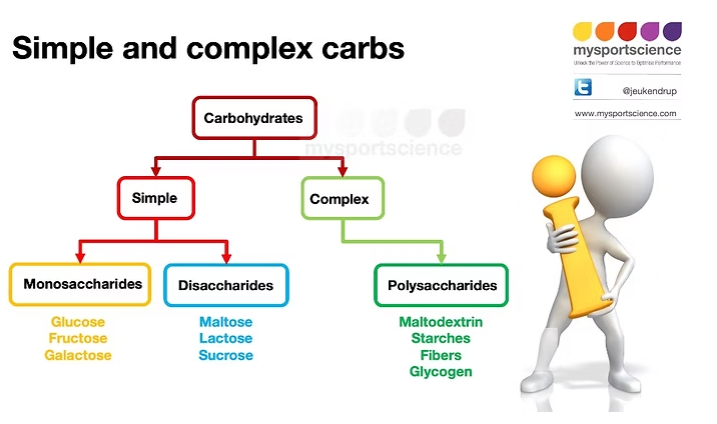
Although these structures differ from each other, they are all ultimately used within the body's energy supply. Especially during moderate to high-intensity exercise, carbohydrate burning is dominant. Fat burning also provides energy, but is slower and is therefore less suitable when an athlete wants to deliver a higher pace or higher power output.
In addition, the efficiency of energy production also plays a role. The oxidation of carbohydrates provides more energy per liter of oxygen than fat oxidation. Because oxygen availability is limited during exercise, this means that when using carbohydrates, an athlete can produce more energy with the same oxygen uptake. This directly contributes to the ability to maintain higher intensities.
From food to fuel: glycogen as key
After consumption, carbohydrates are partly used directly as energy, but are also largely stored as glycogen. This mainly happens in two places:
- Muscle glycogen (± 400 g) → direct fuel for the working muscle
- Liver glycogen (± 80-100 g) → stabilizes blood glucose
Together, this amounts to approximately 500 grams of glycogen (± 2000 kcal), which corresponds to approximately 5-8 g of carbohydrates per kilogram of body weight, depending on muscle mass, training status and diet. Although this seems substantial, these stocks are relatively limited in the context of prolonged effort.
An important detail is that muscle glycogen is used exclusively locally. The muscle that stores glycogen uses this supply itself. It cannot be released into the bloodstream to support other tissues. That is precisely why the availability of muscle glycogen is one of the most important determinants of performance in endurance sports.
What happens during exercise?
During exercise where the intensity is moderate to high, the body increasingly shifts towards using carbohydrates as a primary source of energy. A significant part of this energy is supplied by glycogen, the stored form of carbohydrate in the muscles and liver.
As the exercise continues, these glycogen stores are gradually used. At the beginning of an effort, there is usually still more than enough glycogen available and the energy supply is relatively efficient. However, as the duration increases and stocks continue to decline, it becomes increasingly difficult to keep supplying the same amount of energy.
This process is gradual, but is experienced by many athletes as a clear change, often referred to as “the man with the hammer” whether “hitting the wall”. At that time, several symptoms often develop at the same time:
- a sudden feeling of severe tiredness
- a clear decline in power production
- no longer being able to maintain the intended pace
- an increase in the perceived effort
- mental exhaustion or loss of concentration
Physiologically, this is related to a reduced availability of carbohydrates as a fast source of energy. As a result, the body becomes more dependent on fat burning, a process that is relatively slow and less suitable for maintaining higher intensities.
In addition to muscle glycogen, blood glucose also plays an important role. This is maintained by the release of glucose from the liver. As the exercise continues and these stocks also decrease, blood glucose can fall. This affects not only muscle function, but also the central nervous system, which depends on a continuous supply of glucose.
When blood glucose continues to fall, symptoms such as dizziness, loss of concentration, a sense of weakness and decreased coordination can occur. In contrast to the more gradual fatigue associated with glycogen depletion, these symptoms are often more acute.
The combination of declining muscle glycogen and falling blood glucose is thus an important limiting factor for performance during prolonged exercise.
Carbohydrates before exercise: the basis for performance
A good performance doesn't just start at the start of a training or competition, but in the hours before. The availability of carbohydrates and, in particular, the amount of glycogen in muscles and liver plays a crucial role here.
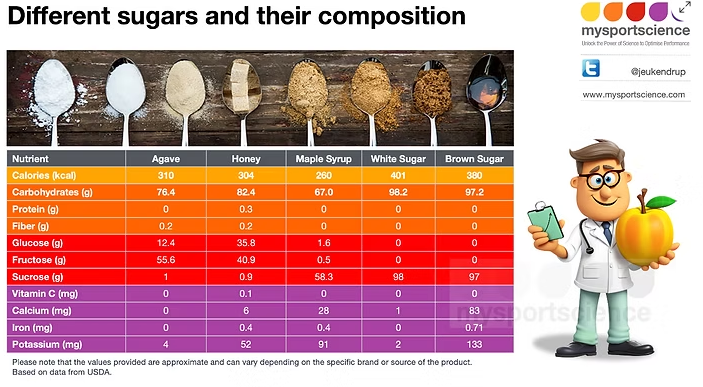
After a night's sleep, the glycogen stores in the liver are significantly reduced. This is because the liver continuously releases glucose into the bloodstream throughout the night to keep blood sugar levels stable. Muscle glycogen remains largely intact, but liver glycogen may be markedly reduced in the morning. Because this liver supply plays an important role in maintaining blood glucose levels at the start of exercise, supplementing it before exercise is relevant. Not only the amount but also the type of carbohydrate plays a role in this. Glucose and starch contribute to both muscle and liver glycogen via blood glucose, while fructose is absorbed and metabolized in the liver relatively more efficiently. In practice, this means that a combination of different carbohydrate sources, such as cereals combined with fruit or sucrose, can contribute to a more complete complement of both muscle and liver glycogen.
When an athlete in that condition starts exercise without taking carbohydrates beforehand, this can lead to a faster drop in blood glucose, a higher dependence on muscle glycogen and a greater risk of premature fatigue. That's why supplementing carbohydrates before exercise is essential.
How much carbohydrate before exercise?
A practical and well-founded guideline is to consume 2 to 4 grams of carbohydrates per kilogram of body weight in the 3 to 5 hours before exercise.
For an athlete from:
- 60 kg → 120-240 g
- 70 kg → 140-280 g
- 80 kg → 160-320 g
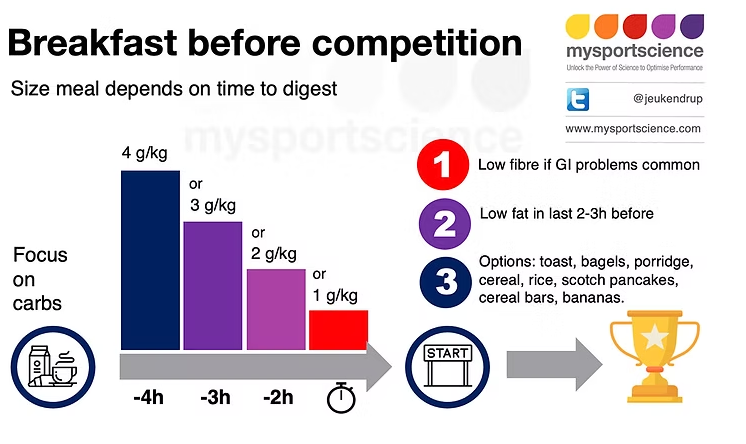
These amounts ensure that both muscle and liver glycogen are optimally replenished and that the athlete starts with a well-filled “tank”.
So what do you eat in practice?
In the hours before exercise, the focus is mainly on:
- carbohydrate-rich food (combination of glucose and fructose)
- relatively low fat intake
- limited amount of fiber
Examples of suitable meals include:
- oatmeal with banana and honey
- bread or bagels with jam
- rice or pasta with a light sauce
- breakfast cereals with milk
The purpose of this meal is not only to supplement glycogen, but also to support stable blood glucose during the start of the exercise.
In addition to the amount of carbohydrates, the composition of the meal is also important. Foods rich in fiber, fats and, to a lesser extent, proteins can delay gastric emptying and increase the risk of gastrointestinal problems during exercise.
Especially during competitions or intensive training, many athletes therefore consciously opt for easily digestible, carbohydrate-rich and low-fiber food. In practical terms, this means, for example, white grains instead of whole grain products, little raw food just before exercise and no heavy, high-fat meals.
Timing is at least as important as quantity. Although the 2-4 g/kg guideline works well for 3-5 hours beforehand, timing remains individual.
Some athletes easily tolerate a larger meal 3-4 hours in advance, while others perform better with a smaller meal and possibly an extra snack closer to the effort.
It is important that:
- the meal gets enough time to digest
- the athlete feels comfortable at the start
- and the strategy has been tested repeatedly in training
Carbohydrate intake in the last hour before exercise
In addition to eating in the hours before exercise, many athletes choose to consume carbohydrates in the last hour before the start, for example to bridge a longer period of time without intake or to start with a subjective sense of sufficient energy.
This timing is physiologically relevant because of the transition from rest to exercise. When carbohydrates are taken shortly before exercise, a temporary increase in insulin may occur. In combination with increased glucose uptake by the muscles at the start of exercise, this can lead to an accelerated drop in blood glucose.
This phenomenon, often referred to as'rebound hypoglycaemia is usually a mild and temporary decline. Although this does not necessarily lead to a loss of performance, some athletes report complaints such as light-headedness, tremors or a decreased sense of muscle strength, especially in the initial stages of exercise.
The extent to which this response occurs varies considerably between individuals. Factors such as insulin sensitivity, training status, prior nutritional intake and intensity of exercise strongly influence how the body responds to carbohydrate intake in this phase. As a result, the practical relevance is highly context-dependent.
The amount, timing and type of carbohydrate play an important role in this. In practice, intakes of around 15-30 grams (±0.2-0.4 g/kg body weight) are usually well tolerated. Higher intakes, in the order of 30-60 grams, may increase the risk of an adverse glucose response in sensitive athletes, especially when this strategy has not been tested beforehand in training.
Where a full-fledged meal serves as a basis 3-5 hours before the start, the final phase often opts for a small, rapidly available intake in the 5-15 minutes prior to exercise. The time window between approximately 30 and 75 minutes before the start seems less favorable for some athletes, because there is sufficient time for an insulin response without the ingested carbohydrates directly contributing functionally to the energy supply during exercise.
As far as the composition is concerned, preference is given to rapidly absorbed carbohydrate sources with a low amount of fat, fiber and protein, to promote rapid availability and to minimize gastrointestinal stress. Practically, this translates to products such as sports drinks, gels, white bread with jam or ripe fruit.
Practical example
A situation familiar to many athletes is that of a longer effort where you take a break, for example for a stop on a terrace, eat or drink something with rapidly absorbed carbohydrates such as cakes or soft drinks, and then move on immediately.
At such a time, just like carbohydrate intake just before exercise, a temporary mismatch can occur between insulin levels and available glucose. The rapid carbohydrate intake causes insulin to rise, while the muscles suddenly absorb more glucose when the exercise is resumed.
This can lead to a temporary drop in blood glucose. Some athletes notice this as dizziness, lightheadedness, or a dip in performance, and in exceptional cases, someone may even faint or faint.
Carbohydrates during exercise
During exercise, the role of carbohydrates changes fundamentally. Where the focus is on filling glycogen stores before the start, during prolonged exercise, the limiting factor shifts to the supply of new energy. Because the available glycogen stores in muscles and liver are relatively limited, supplementing carbohydrates during exercise becomes essential to support performance.
Without external carbohydrate intake, glycogen stores are gradually depleted and blood glucose decreases. This ultimately leads to a combination of peripheral fatigue (in the muscle) and central fatigue (via the nervous system). By ingesting carbohydrates during exercise, an athlete can slow down these processes and maintain the available energy for longer.
How much carbohydrate during exercise?
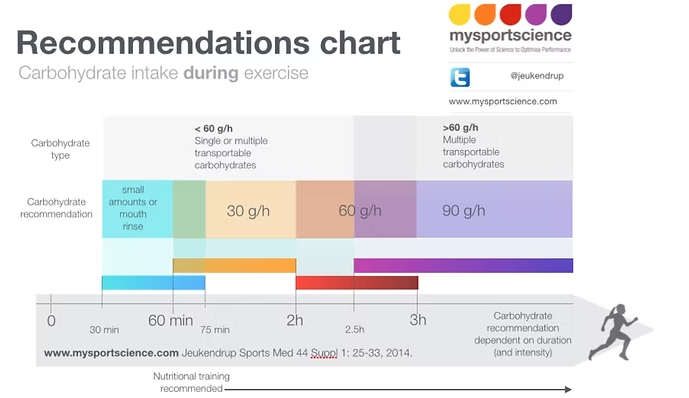
The optimal amount depends a lot on the duration of the effort:
- at 1 to 2.5 hours, 30 to 60 grams per hour is usually recommended
- when exercising longer than approximately 2.5 hours, this rises to approximately 90 grams per hour
- advanced athletes nowadays sometimes experiment with 100 to 120 grams per hour or even more
Converted, this roughly amounts to approximately 0.4 to 1.3 grams of carbohydrates per kilogram of body weight per hour.
Why carbohydrates are so effective during exercise
Ingesting carbohydrates during exercise has several effects that directly contribute to performance:
- maintaining blood glucose levels, which is essential for both muscles and the brain
- supplementing exogenous carbohydrates, so that glycogen is less likely to be used
- delaying fatigue, both physically and mentally
- supporting higher carbohydrate oxidation, which is particularly relevant at higher intensities
An important underlying mechanism here is the so-called “glycogen sparing effect”. By taking carbohydrates during exercise, the dependence on muscle glycogen is reduced. As a result, the internal glycogen stores are depleted less quickly, making it possible to maintain a higher intensity for longer. Especially when exercising longer than approximately 90 minutes, this effect becomes increasingly visible.
Carbohydrate mouth rinse: performance without absorption
In addition to actual carbohydrate intake, there is also a lesser-known strategy: rinsing the mouth with a carbohydrate solution without swallowing it.
Research shows that receptors in the mouth can detect carbohydrates and send signals to areas of the brain that are involved in motivation and motor output. This can lead to an improvement in performance, even without the carbohydrates actually being absorbed and used as fuel.
This effect seems particularly relevant for efforts of approximately 30 to 75 minutes, where glycogen stores are still relatively sufficient and the limiting factor is partly central (in the nervous system).
In situations where it is difficult to ingest carbohydrates, for example due to gastrointestinal problems or limited drinking options, a mouth rinse can be a practical additional strategy. This effect is relatively small (around 2-3%), but can still be meaningful in a competitive context.
In most sports contexts, however, actual carbohydrate intake remains preferred, as it offers both central and metabolic benefits.
From muscle to intestine: where is the limitation?
Interestingly, the limiting factor during exercise does not primarily lie in:
- the muscle itself
- or glycogen availability
but is increasingly shifting to:
- the absorption capacity of the intestine
- the transport mechanisms of carbohydrates
- and the oxidation of exogenous carbohydrates
In other words, the problem is not just how much energy you need, but above all how much energy your body can absorb and process per unit of time.
This explains why recommendations for carbohydrate intake during exercise are almost always expressed in grams per hour, rather than grams per kilogram of body weight.
Why grams per hour and not per kilogram of body weight?
For daily carbohydrate requirements, it makes sense to work with g/kg, because larger athletes usually have more muscle mass and can therefore store more glycogen.
This is different during exercise. Research has long shown that the maximum amount of carbohydrates that can be oxidized during exercise varies relatively little between individuals. Especially when ingesting simple carbohydrates such as glucose, this limit was often around 60 g per hour, regardless of body weight.
While recent research suggests that there may be some relationship between body weight and oxidation capacity, in practice this appears to be limited and highly dependent on individual variation. Some lighter athletes achieve very high oxidation rates, while some heavier athletes score lower.
That is why guidelines in grams per hour remain practical and widely applicable.
Multiple transportable carbohydrates: a breakthrough in sports nutrition
For a long time, it was believed that the body could not absorb and use more than about 60 grams of carbohydrates per hour during exercise. That limit ultimately turned out not to lie in gastric emptying, muscle uptake or burning in the muscle, but in the absorption capacity of the intestine.
The absorption of carbohydrates in the small intestine takes place via specific transport proteins:
- glucose via the SGLT1 transporter
- fructose via the GLUT5 transporter
When an athlete only takes glucose or maltodextrin, uptake is entirely dependent on SGLT1. However, this transporter becomes saturated at around 60 grams per hour.
The breakthrough came when researchers started combining glucose and fructose. As a result, two different transporters are used and the total uptake capacity can increase.
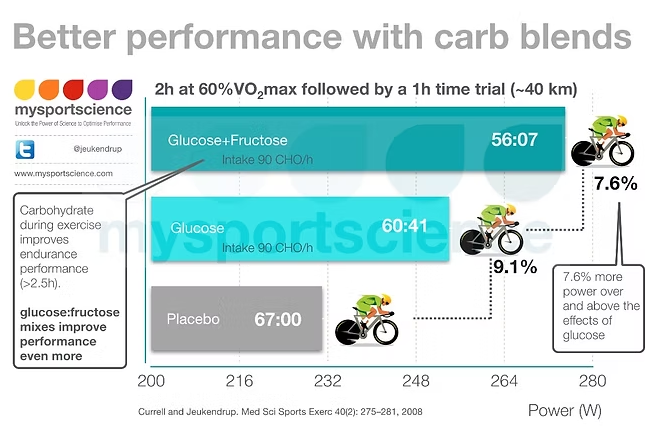
Research showed that exogenous carbohydrate oxidation, i.e. the use of ingested carbohydrates, can be up to 50% higher with a combination of glucose and fructose compared to glucose alone.
This had major practical implications. Athletes were able to absorb more carbohydrates per hour, the dependence on glycogen decreased, blood glucose remained better and, in some situations, this led to better performance and less fatigue.
Now that it is clear that combining glucose and fructose increases the absorption capacity, the question automatically arises what is the optimal ratio between the two.
Practical examples
In practice, this means approximately:
- at 80 grams per hour, a ratio of approximately 3:1 can make sense
- at 90 grams per hour approximately 2:1
- at 100 to 110 grams per hour, a ratio towards 1:0.8
- with even higher intakes, sometimes even towards 1:1
The commonly used 2:1 ratio has historically been based on studies around 90 grams per hour. So it's not the case that 2:1 is by definition the best ratio, but rather that it works well within a certain intake range.
For athletes, this means that choosing a carbohydrate strategy does not start with the ratio, but with the question: how many carbohydrates per hour do I want and can I consume?
More isn't always better
With the rise of modern sports nutrition and better knowledge about carbohydrate combinations, higher intakes, such as 100 to 120 grams per hour or more, have become increasingly common, especially at the elite level.
However, a higher intake is only useful if it is also effectively absorbed and tolerated. When the absorption capacity is exceeded, part of the ingested carbohydrates cannot be used as an energy source and the risk of symptoms increases. This is currently a topic that is receiving a lot of attention in both research and practice, and it is expected that we will learn even more about this in the coming years.
Training The Gut
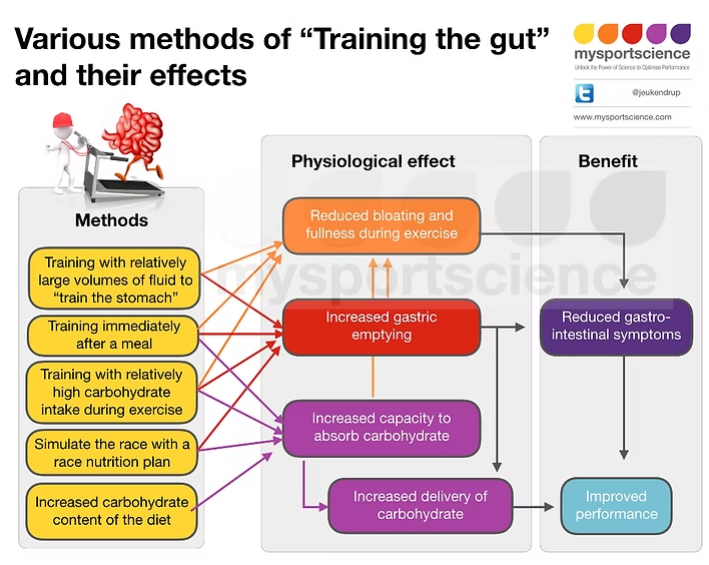
This is where training the gut comes into the picture. The gut is trainable. Regular exposure to higher intakes can lead to increased activity of transporters such as SGLT1 and GLUT5, more efficient carbohydrate uptake, faster gastric emptying and fewer gastrointestinal problems.
For athletes who aim for higher carbohydrate intake during exercise, gut training is therefore essential. In practice, this means that the intake of carbohydrates during training sessions is consciously built up and practiced.
For many athletes, the best balance is around 60 to 90 grams per hour, while well-trained and experienced athletes with sufficient gut training may benefit from higher intakes.
What does this mean in practice?
For athletes who aim for higher carbohydrate intake during exercise, gut training is essential. This means that carbohydrate intake is consciously built up and practiced during training, for example by:
- gradually increase the hourly intake
- combining different carbohydrate sources
- optimizing the timing and distribution of intake
- and to repeat this consistently in training sessions that are similar to the competition situation
Without this adaptation, there is a good chance that higher intakes will lead to complaints instead of improving performance.
Carb loading
Increasing glycogen stores before a race, better known as carb-loading, has been a fixed strategy in endurance sports for decades. The idea is simple: the more carbohydrates available at the start, the longer an athlete can perform at a high level.
The classic approach
Originally, a classic supercompensation protocol was used. In addition, a tough workout was first performed to deplete glycogen stores, followed by three days with a very low carbohydrate intake and then three days with an extremely high carbohydrate intake.
While this protocol was effective in increasing glycogen stores, it also had obvious drawbacks. The heavy exhaustion training just before a competition could negatively affect recovery, the period with low carbohydrate intake was often associated with fatigue and the protocol led to gastrointestinal complaints for many athletes.
Modern insights
Later studies have nuanced the picture of carb-loading. Although a high glycogen supply is clearly beneficial for performance, it appears that extremely high glycogen levels are not necessary.
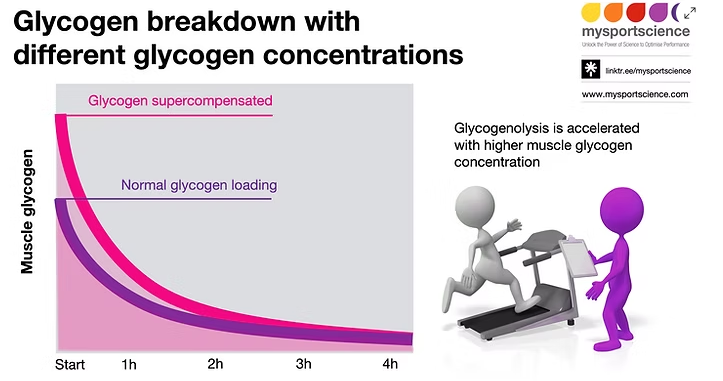
An important insight here is that glycogen is not only an energy store, but also influences how quickly it is used. When an athlete starts with very high glycogen stores, the activity of enzymes involved in carbohydrate burning is higher. This means that glycogen is also broken down more quickly at the beginning of the exercise.
In practical terms, this means that the difference between high and very high glycogen can be visible especially in the initial stages, but that after about 60 to 90 minutes, the differences often become smaller.
The practical approach
Based on these insights, carb-loading has evolved into a much simpler model. For many endurance athletes, it is sufficient to consciously eat more carbohydrates in the last 1 to 2 days before a competition, while reducing the training load.
A practical guideline is to increase the carbohydrate intake to approximately 5-7 g/kg, up to 7-10 g/kg per day at higher loads.
It is important that carb-loading does not automatically mean that you simply have to eat more. It's mainly about eating differently: a higher proportion of carbohydrates and relatively less fat.
Watch out for gastrointestinal sensitivity
For athletes who are sensitive to gastrointestinal complaints, it is also wise to limit fiber intake in the last 24 to 48 hours. That is why many athletes in this phase opt for easily digestible, low-fiber carbohydrate sources, such as white rice, white pasta and white bread.
Recovery after exercise: more than just supplementing glycogen
After exercise, the focus shifts from providing energy to recovering and preparing for the next load. Although this often gets less attention than nutrition before and during exercise, it is precisely this phase that is crucial for maintaining long-term performance.
One of the most important goals after exercise is to replenish glycogen stores. During prolonged or intense exercise, these stocks can decrease significantly, and in some cases even become almost completely depleted. If these are not supplemented in time, this can have consequences for both recovery and performance at the next training or competition.
Restoring glycogen stores is a time-sensitive process
Immediately after exercise, the body is extra sensitive to absorbing and storing carbohydrates. This is sometimes referred to as the “window of opportunity”. In this phase, the rate of glycogen resynthesis is highest, partly due to increased insulin sensitivity and increased activity of enzymes involved in glycogen storage.
When there is less than approximately 8 hours between two efforts, it is therefore recommended to consume 1.0—1.2 grams of carbohydrates per kilogram of body weight per hour for the first four hours after exercise.
For example, this means:
• 60 kg → 60-72 g per hour
• 70 kg → 70-84 g per hour
• 80 kg → 80-96 g per hour
This strategy allows the glycogen supply to be replenished as quickly as possible, which is particularly important when:
• multiple training sessions per day
• intensive training weeks
• or multi-day races
In addition to the total amount of carbohydrates, the type of carbohydrate also plays a role in the recovery process. While glucose mainly contributes to the replenishment of glycogen in the muscles, fructose appears to be relatively more efficient for replenishing liver glycogen.
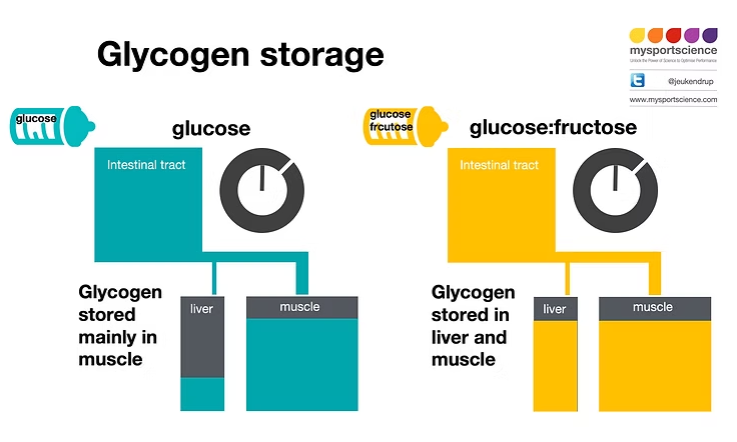
Although muscle glycogen is often the most important limiting factor for performance recovery, supplementing liver glycogen is particularly relevant during prolonged exercise, morning workouts, or situations with limited recovery time. In this context, a combination of glucose and fructose can offer benefits. Research shows that combining different carbohydrate sources not only leads to a higher total carbohydrate intake, but can also support the rate of glycogen replenishment. Practically, this translates to the use of products or foods that contain both glucose and fructose, such as sports drinks, fruit or combinations of different sugars.
Multi-day effort: recovery becomes a performance determiner
When athletes train or compete for several days in a row, the role of nutrition changes again. Where recovery with a single effort is mainly focused on the next session, with multi-day loads, the goal becomes wider: preventing fatigue from piling up from day to day.
This is what you see, for example, at training camps, stage races, cycling holidays with daily long rides and intensive training weeks.
During prolonged exercise, glycogen stores are significantly used. If they are not fully replenished afterwards, a cumulative energy shortage occurs. As a result, an athlete starts each day with slightly less available energy.
Daily guideline
In multi-day situations, the total daily carbohydrate intake in particular becomes crucial. A practical guideline here is around 6 to 10 grams of carbohydrates per kilogram of body weight per day, depending on the training load.
This total requirement consists of the combination of carbohydrate intake during exercise, immediate supplementation afterwards and further intake spread over the rest of the day. Although part of this need can already be met during exercise, this intake is largely used directly as fuel. Supplementary intake after exercise and later in the day therefore remains essential for fully restoring glycogen stores.
Not only the total amount, but also the spread over the day is important. Many athletes make the mistake of eating immediately after exercise, but not getting enough energy later in the day.
An effective strategy consists of a combination of carbohydrate intake during exercise, a quick intake immediately afterwards and then one or more high-carb meals, supplemented with snacks throughout the day.
When exercising for several days, it is therefore often wise to eat proactively, even without obvious hunger.
For example, this means:
• 60 kg → 360—600 g per day
• 70 kg → 420—700 g per day
• 80 kg → 480—800 g per day
The exact need depends on:
• training duration
• intensity
• total energy consumption
• and individual factors such as training status
Carbohydrates and cravings: an often forgotten link
One aspect that is often underestimated in practice is the relationship between carbohydrate intake after exercise and the development of cravings later in the day.
When glycogen stores are insufficiently replenished, the body remains in an energetic deficit. This not only affects physical recovery, but also the regulation of appetite and energy intake.
This can be expressed in a stronger appetite for energy-rich foods, cravings for high-carbohydrate and fat-rich products and less control over food choices later in the day.
When athletes consume enough carbohydrates immediately after exercise, this can help to replenish glycogen stores more quickly, restore energy balance and reduce the risk of strong cravings later in the day.
Carbohydrates and body weight: a persistent misunderstanding
Within sports nutrition, there are still many misunderstandings about the relationship between carbohydrates and body weight. Carbohydrates are regularly seen as “fattening”, which means that athletes sometimes limit their intake.
It is therefore important to make the distinction clear: carbohydrates alone are not the cause of weight gain. Weight gain occurs when there is a structural positive energy balance: energy intake exceeds energy consumption.
For endurance athletes, who often have a high energy requirement, limiting carbohydrates is therefore often counterproductive. A carbohydrate intake that is too low can lead to reduced glycogen stores, faster fatigue, worse recovery and a decrease in training quality.
Glycogen and moisture
A second factor contributing to the idea that carbohydrates make you fat is the relationship between glycogen and moisture. When carbohydrates are stored as glycogen in muscles and liver, water is also bound.
The rule of thumb here is that 1 gram of glycogen binds approximately 3 grams of water.
This means that when an athlete increases their carbohydrate intake, for example during carb-loading, the body weight can temporarily increase. However, this is not due to an increase in fat mass, but due to an increased glycogen supply and associated fluid storage.
For endurance athletes, it is therefore important to properly understand weight fluctuations in the context of carbohydrate intake.
Conclusion
Carbohydrates are the most important fuel for endurance sports performance. The combination of limited glycogen stores and high energy requirements makes a well-thought-out strategy for carbohydrate intake essential.
If you want to perform well, it is wise to start with sufficiently filled glycogen stores, to use carbohydrates strategically during exercise, to combine glucose and fructose at higher intakes, to take recovery seriously and to tailor dietary strategies to individual tolerance and intestinal adaptation.
At the same time, the current literature shows that carbohydrate strategies should be seen less and less as fixed rules. There is no one perfect amount, no perfect ratio, and no perfect timing that works for every athlete.
Precisely for this reason, the most important rule remains unchanged: test everything in training, not on race day.


